Palm Tree Trimming Services
Palm Tree Trimming Services
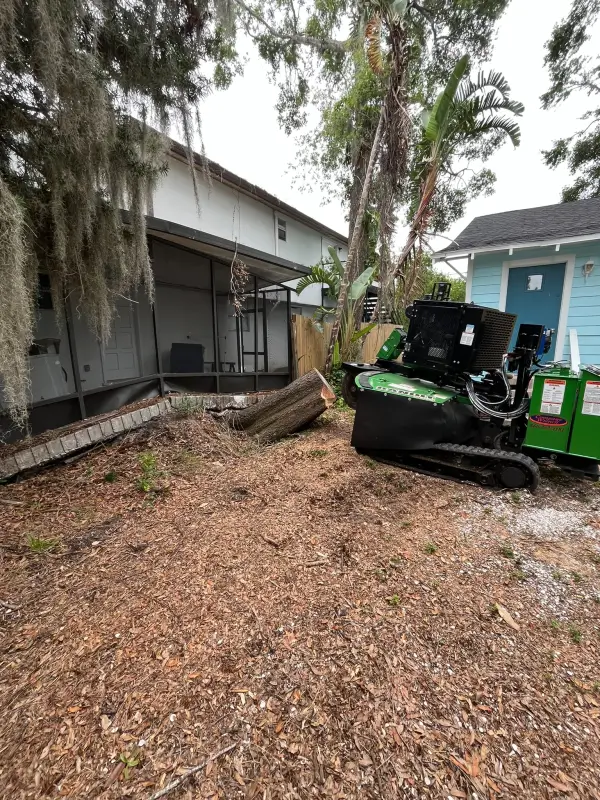
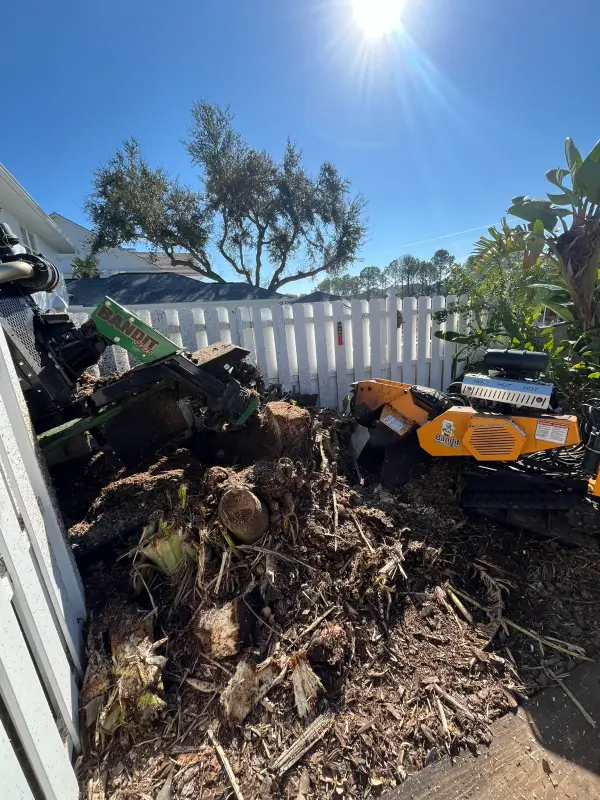
Palm trees give Florida landscapes their distinctive look. They also have very different care needs than oaks, pines, or maples. Many homeowners assume a palm should be trimmed aggressively before hurricane season — often asking for a “hurricane cut” that leaves only a few fronds at the top. Research shows this practice actually weakens palms and makes them more likely to fail in high winds . Grindem Out Tree Service provides palm tree trimming that follows proven best practices: remove what is dead or hazardous, leave the rest to support the palm’s health. In addition, we handle tree removal, emergency tree removal, stump grinding, tree trimming, and mulching service.
Explore More Service Areas
Why Palm Trimming Is Different From Tree Trimming
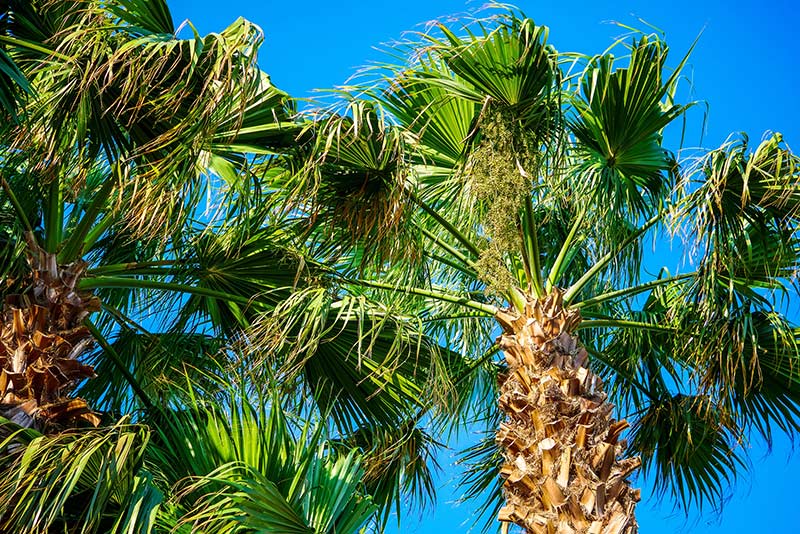
Palms are not trees in the traditional sense. They are more like tall grasses with a single growing point at the top of the trunk . That growing point — called the bud — is the only place new fronds emerge. If it is damaged, the palm dies.
This biology changes everything about how palms should be pruned. Trees can lose large limbs and recover. Palms cannot. Every frond that is cut represents lost photosynthetic capacity, and the palm has no way to regrow that specific leaf. The fronds that remain are the only food-producing tissue the palm has.
What Palm Tree Trimming Should Remove
Proper palm trimming focuses on a short list of items that are safe to remove.
Completely Dead Fronds
A brown, completely dead frond no longer produces food for the palm. Removing it is safe and improves the tree’s appearance . Some palm species, like royal palms, Christmas palms, and buccaneer palms, shed dead fronds on their own. Others, like cabbage palms and queen palms, hold onto dead fronds and need them removed manually .
Flower and Fruit Stalks
Palm flowers and fruit stalks can be removed without harming the palm. In fact, removing them before they develop can redirect the palm’s energy toward growth instead of reproduction . Large fruit, like coconuts, poses a safety hazard and should be removed before hurricane season when they can become projectiles .
Hazardous or Broken Fronds
Any frond that is broken, hanging, or posing a risk to people or property should come off. A frond touching a roof or blocking a walkway needs removal regardless of its color .
What Should Stay: Green and Partially Green Fronds
This is where many palm trimming services get it wrong. Green fronds — and even fronds that are partially green with some yellowing or browning — are still feeding the palm . Removing them robs the tree of nutrients and energy.
Palm fronds are nutrient reservoirs. Older fronds hold potassium and magnesium that the palm can pull back into new growth when needed . When those fronds are cut prematurely, the palm loses that reserve. Over time, this creates nutrient deficiencies that show up as more yellowing, more browning, and more fronds that need to come off.
Why the “Hurricane Cut” Is a Bad Idea
The “hurricane cut” — also called a “pineapple cut” or “feather duster” — removes healthy fronds to open up the canopy and supposedly let wind pass through. This practice is not supported by research.
Studies following major hurricanes found that palms given hurricane cuts were more likely to have their crowns snap than palms that were left alone or lightly pruned . The younger leaves left behind lack the support that older leaf bases normally provide. Removing the older fronds removes that structural protection.
Over-pruned palms also suffer long-term damage. The stress of losing too many fronds at once can lead to “penciling,” where the trunk narrows below the crown and becomes structurally weak . This can eventually cause crown failure years later.
The 9 o’clock to 3 o’clock Rule
If you want a simple guide for how much is too much, picture a clock face over the palm canopy. The horizontal line across the middle runs from 9 o’clock on the left to 3 o’clock on the right.
Pruning should never remove fronds above that horizontal line . In other words, the lowest fronds you might remove should be at or below the 9-to-3 position. Any green frond above that line is still contributing to the palm’s health.
It is important to understand that this is a maximum limit, not a target . A healthy, properly trimmed palm should have a full, rounded canopy with green fronds extending well below that line. Pruning to exactly the 9-to-3 position every time is not the goal.
How Often Palms Should Be Trimmed
Palms do not need annual trimming. Prune according to need, not on a schedule . A palm only needs trimming when it has completely dead fronds, flower or fruit stalks, or hazardous growth.
For most residential palms in the Tampa Bay area, that means trimming every one to three years depending on the species and how many dead fronds accumulate. Self-cleaning palms may need little to no trimming. Non-self-cleaning species like queen palms and cabbage palms may need more regular attention .
When to Schedule Palm Trimming
Palms can tolerate trimming at most times of year, but there are better and worse windows.
Late spring through early summer is a reasonable time to clean up any winter damage and remove dead material . Late summer through early fall is another common window, especially for removing fruit and flower stalks before storm season peaks .
Avoid trimming palms during extreme heat or drought stress. A palm that is already struggling should not lose fronds on top of existing stress.
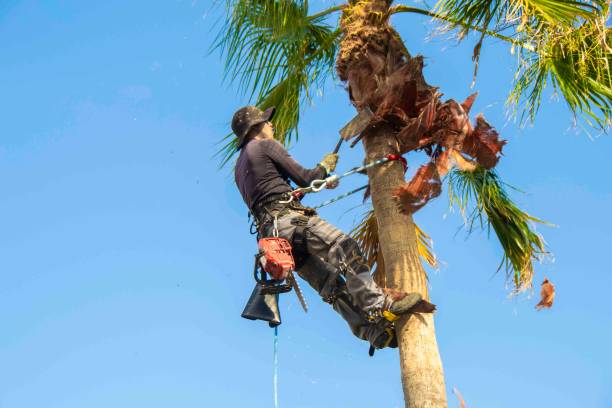
What Happens During a Palm Trimming Service
The process is straightforward, though the details depend on the palm species and its condition.
Assessment. We look at the palm’s species, overall health, and which fronds are dead, dying, or hazardous. We identify the 9-to-3 line and determine what can safely be removed.
Trimming. Dead fronds are cut close to the trunk but not into it. Flower and fruit stalks are removed. The canopy should still look full when we finish — not stripped down to a few fronds.
Cleanup. All cut material is hauled away or chipped. The work area is cleared.
Questions to Ask Before Hiring a Palm Trimming Service
Before you hire anyone for palm trimming, ask:
Are you insured for property damage, liability, and workers’ compensation?
Do you follow the 9-to-3 pruning standard?
Will you remove green or partially green fronds, or only completely dead ones?
Are you familiar with the palm species on my property?
Is debris removal included?
Do you climb with spikes? (Spikes should never be used on palms because they create wounds that can introduce disease )
A legitimate palm trimming service will answer these questions directly.
Areas We Serve
Grindem Out Tree Service provides palm tree trimming throughout the Tampa Bay area, including:
Other Tree Services We Offer
Palm trimming is one part of what we do. We also handle tree removal, emergency tree removal, stump grinding, tree trimming, and mulching service.
FAQs About Palm Tree Trimming
How often should palm trees be trimmed?
Palms do not need annual trimming. Prune according to need — when dead fronds, flower stalks, or hazardous growth are present. Most residential palms need attention every one to three years depending on species .
Is it OK to cut green fronds off a palm?
No. Green fronds, and even fronds that are partially green, are still producing food for the palm. Removing them starves the tree and creates wounds that can introduce disease .
What is a hurricane cut, and is it good for palms?
A hurricane cut removes healthy fronds to leave only a few at the top. Research shows this practice weakens palms and makes them more likely to lose their crowns in high winds. It is not recommended .
How much can I trim my palm tree?
Follow the 9 o’clock to 3 o’clock rule. Never remove fronds above the horizontal centerline of the canopy. A healthy palm should have a full, rounded crown .
Will trimming palm flowers and fruit hurt the tree?
No. Removing flowers and fruit stalks is safe and can redirect the palm’s energy toward growth. Removing large fruit like coconuts also reduces safety hazards .
Can I trim my palm tree myself?
Small palms may be manageable for a homeowner, but most palms require climbing or working at height. The risk of falls and the potential for damaging the palm’s growing point make professional trimming the safer choice.
Contact Grindem Out Tree Service Today
If you want healthier and better-looking palm trees, Grindem Out Tree Service is here to help. Palm tree trimming services improve curb appeal, support tree health, and help protect your property from potential hazards caused by overgrown or damaged fronds.
Our team proudly provides professional palm tree trimming solutions for residential and commercial properties with a strong focus on safety, quality workmanship, and dependable service. From regular maintenance to large trimming projects, we are committed to helping your property look its best.
Contact Grindem Out Tree Service today to schedule professional palm tree trimming services for your property.