How Does Crane-Assisted Tree Removal Work?
You’ve got a massive oak looming over your house. It’s too large for traditional removal, and there’s no room for it to fall safely. Crane-assisted tree removal is the solution that makes the impossible possible. A crane lifts cut sections of the tree over obstacles, eliminating the need for large drop zones. The result: safe, efficient removal even in the tightest spots.
The Short Answer
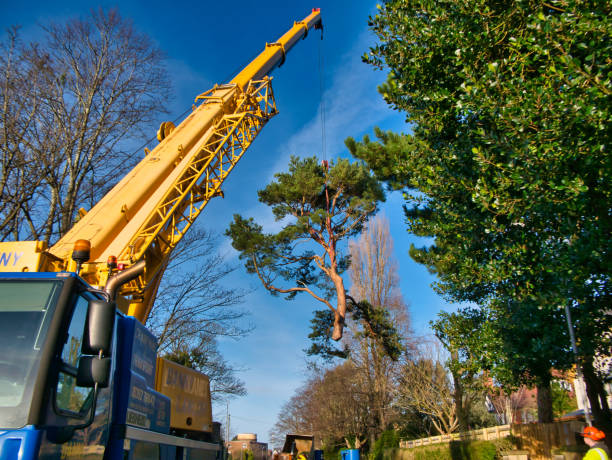
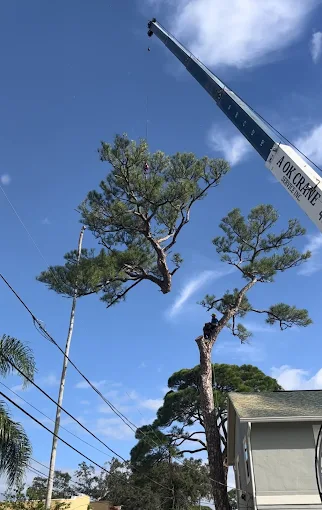
A crane is positioned near the tree, and an arborist climbs up to attach straps to sections being removed. The crane lifts each cut piece, swings it over obstacles, and lowers it to a safe landing zone. This process repeats until the entire tree is removed. The tree comes down in pieces, not all at once.
Why This Method Exists
Traditional tree removal works when there’s plenty of open space. But what if the tree is surrounded by structures? What if it’s leaning dangerously? What if it’s just too big to handle safely? That’s where cranes come in. They allow arborists to work in places that would otherwise be impossible.
The Process: A Bird’s-Eye View
Stage 1: The Setup
A crane arrives on a flatbed truck. The operator extends outriggers to stabilize the crane. The boom rises into the air, reaching toward the tree.
Stage 2: The Climb
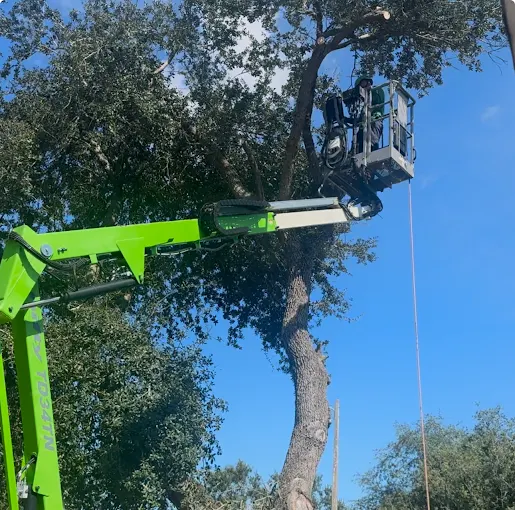
An arborist climbs the tree or uses a bucket truck to reach the top. They inspect the tree from above and plan the cuts.
Stage 3: The Connection
Straps are attached around sections of the tree. These straps connect to the crane’s hook. The crane takes the weight of the section before it’s cut.
Stage 4: The Cut
The arborist cuts the section free. The crane holds it steady as it separates from the tree.
Stage 5: The Swing
The crane swings the section over the house, the fence, the garden—whatever’s in the way—and lowers it to a safe landing zone.
Stage 6: The Processing
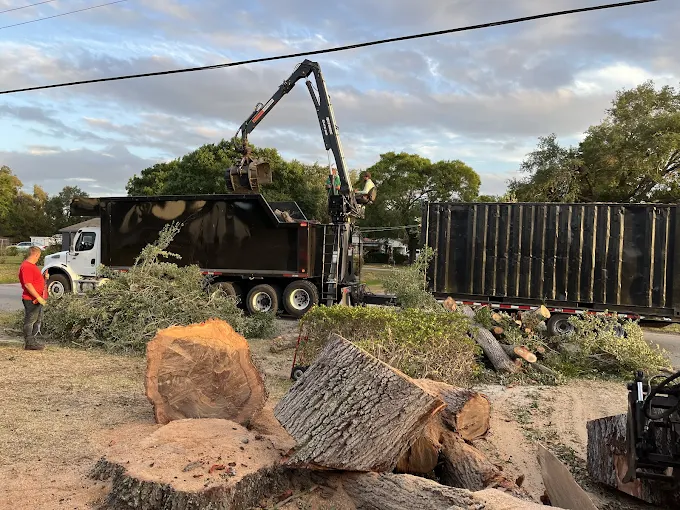
Ground crews cut the section into manageable pieces. They may haul it away or split it for firewood.
Stage 7: The Repetition
This cycle repeats until the tree is completely removed. Each section is carefully cut, lifted, and lowered.
Stage 8: The Cleanup
Once the tree is down, the crane is removed. The team grinds the stump if requested and clears all debris.
When Does a Crane Make Sense?
Scenario A: No Drop Zone
There’s simply nowhere for the tree to fall. Houses, fences, and other trees surround it. A crane can lift sections straight up and over.
Scenario B: Leaner
The tree is already leaning. It’s unpredictable and dangerous. A crane provides stability and control.
Scenario C: The Giant
The tree is enormous. It’s too heavy for traditional removal. A crane has the lifting capacity to handle it safely.
Scenario D: The Emergency
A storm has left a tree hanging precariously. It’s too dangerous to climb. A crane can reach it from the ground.
Scenario E: The Valuable Property
You have a pool, a patio, or landscaping you don’t want damaged. A crane can remove the tree without touching anything below.
The Equipment Behind the Magic
The Crane
The star of the show. A mobile crane with a boom that extends 100 feet or more. The hook hangs from the end of the boom.
The Straps
High-strength nylon straps that wrap around tree sections. They can hold thousands of pounds.
The Rigging
Pulleys, shackles, and other hardware that connect everything together.
The Chainsaw
The tool that does the cutting. Professional-grade saws with sharp chains.
The Radio
The lifeline between the arborist in the tree and the crane operator on the ground. Clear communication is essential.
The People Behind the Process
The Crane Operator
Trained and certified. They control the crane with precision, following the arborist’s instructions.
The Arborist
Climbs the tree or works from a bucket. They make the cuts and attach the straps.
The Ground Crew
Process the wood on the ground. They cut, haul, and clean up.
The Safety Officer
Monitors the job for hazards. They ensure everyone follows safety protocols.
What Makes Crane Removal Special
Precision
A crane can place each section exactly where it’s needed. This minimizes the risk of damage to your property.
Speed
Crane removal is often faster than traditional methods. The tree is removed in fewer pieces.
Safety
The tree is fully supported throughout the removal process. This reduces the risk of unexpected falls.
Access
Even hard-to-reach trees become accessible with a crane. The boom can extend over houses and obstacles.
Cleanup
The crane lifts pieces directly to the landing zone. This reduces the spread of debris.
How Grindem Out Can Help
At Grindem Out, we specialize in crane-assisted tree removal for the toughest jobs. Our team includes certified arborists and crane operators who work together seamlessly. We handle everything from assessment to cleanup, so you don’t have to worry about a thing.
We offer:
Tree Removal – Safe removal of large and difficult trees
Emergency Tree Removal – Quick response for hazardous trees
Stump Grinding – Complete cleanup after removal
Tree Trimming – Preventive maintenance
Brush & Debris Removal – Thorough site cleanup
As a family-owned company, we treat your property with care. We’re licensed, insured, and committed to your satisfaction.
We Serve the Tampa Bay Area
Our team proudly serves homeowners throughout the Tampa Bay area, including Tampa, Clearwater, Largo, Palm Harbor, Tarpon Springs, Oldsmar, Westchase, and surrounding communities.
Frequently Asked Questions
Is crane removal always the best option?
Not always. It depends on the tree’s size, location, and condition. Sometimes traditional removal works perfectly. Other times, cranes are the only safe option. A professional can help you decide.
How much more expensive is crane removal?
Crane removal costs more due to equipment and expertise. However, it may be the only viable option for certain situations. Get a quote to compare.
Does the crane damage my lawn?
Cranes are heavy and may leave marks. However, professionals take precautions to minimize damage. Ground protection mats are often used.
What if the crane can’t reach the tree?
In rare cases, cranes can’t access the site. Alternative methods like rigging or dismantling may be used. A professional will assess the situation.
How long does crane removal take?
A simple removal can take a few hours. Larger or more complex jobs can take a full day or more.